The World’s Best Food Cultures for Vegetarian Travelers
Vegetarian food cultures around the world are some of the oldest, most refined culinary traditions on the planet, and for the discerning traveler they offer a way to see a destination from the inside out. Long before plant-based eating became a wellness trend, entire civilizations built their finest cuisine around vegetables, grains, legumes, and the rituals that surround them. These traditions are not compromises or afterthoughts. They are the main event, shaped over centuries by religion, geography, and a deep respect for the land.
For the luxury vegetarian traveler, understanding the world’s vegetarian food cultures transforms a trip from a simple holiday into a genuine cultural immersion. When you know why a Japanese monk plates a meal a certain way, or why an Ethiopian table goes meat-free twice a week, every bite becomes a story. This guide walks you through the most remarkable vegetarian food cultures across the globe, the dishes that define them, and how to experience each one at the highest level of comfort and craft.
If you are still mapping out your itinerary, our Ultimate Guide to Luxury Vegetarian Travel pairs beautifully with this cultural deep dive. Here, though, the focus is on the heritage behind the food, not just the destinations on a map.
Why Vegetarian Food Cultures Matter to the Luxury Traveler
It is tempting to think of vegetarian travel as a matter of logistics, finding the right restaurant, the right hotel, the right dish. But the world’s great vegetarian food cultures reward a deeper kind of curiosity. They tell you what a society values, what it worships, and how it has survived. Plant-forward cuisine often emerged from religious devotion, scarcity, or a philosophy of non-violence, and those origins still shape the flavors on the plate today.
Consider how differently these traditions came to be. In India, abstaining from meat is an act of faith practiced by hundreds of millions. In Tuscany, it was poverty that taught cooks to coax glory from beans and stale bread. In Ethiopia, the church calendar dictates when the whole country eats vegan. Each of these vegetarian food cultures answers the same question, how do we eat well without meat, in a radically different way, and that variety is precisely what makes the subject so rich for a traveler.
Luxury, in this context, is not about excess. It is about access and depth: a private cooking class with a temple chef, a tasting menu that took a kitchen three days to prepare, a guided market walk through ingredients you have never seen. The most rewarding vegetarian food cultures cannot be rushed, and the luxury traveler has the rare privilege of time and access to savor them properly. A package tourist eats lunch; a thoughtful traveler eats a thousand years of history.
Across the destinations below, a few themes recur. Many of these traditions are rooted in faith. Most are profoundly seasonal, tied to what the land offers in a given month. And nearly all of them treat vegetables not as a side note but as the soul of the meal. That shared philosophy is what makes exploring the world’s vegetarian food cultures so satisfying, whether you are kneeling at a low table in a Kyoto temple or perched on a stool in an Oaxacan market.
India: The World’s Deepest Vegetarian Food Culture
No conversation about vegetarian food cultures can begin anywhere but India. With more than 400 million people identifying as vegetarian, India has the lowest rate of meat consumption of any nation, and researchers estimate that roughly 38 percent of its population eats no meat at all. This is the largest and arguably the most influential plant-based tradition on earth, and it has shaped vegetarian cooking far beyond its own borders.
The roots run through three faiths, Hinduism, Jainism, and Buddhism, all of which embrace the principle of ahimsa, or non-violence toward living things. Close to 85 percent of India’s population practices one of these religions. Jain vegetarianism is among the most rigorous in the world, with strict adherents avoiding even root vegetables like onions, garlic, and potatoes to prevent harm to the soil organisms disturbed in harvesting them. This religious foundation explains why India’s vegetarian food culture is so layered and so confident: it has never been a diet of restriction, but one of joyful abundance.
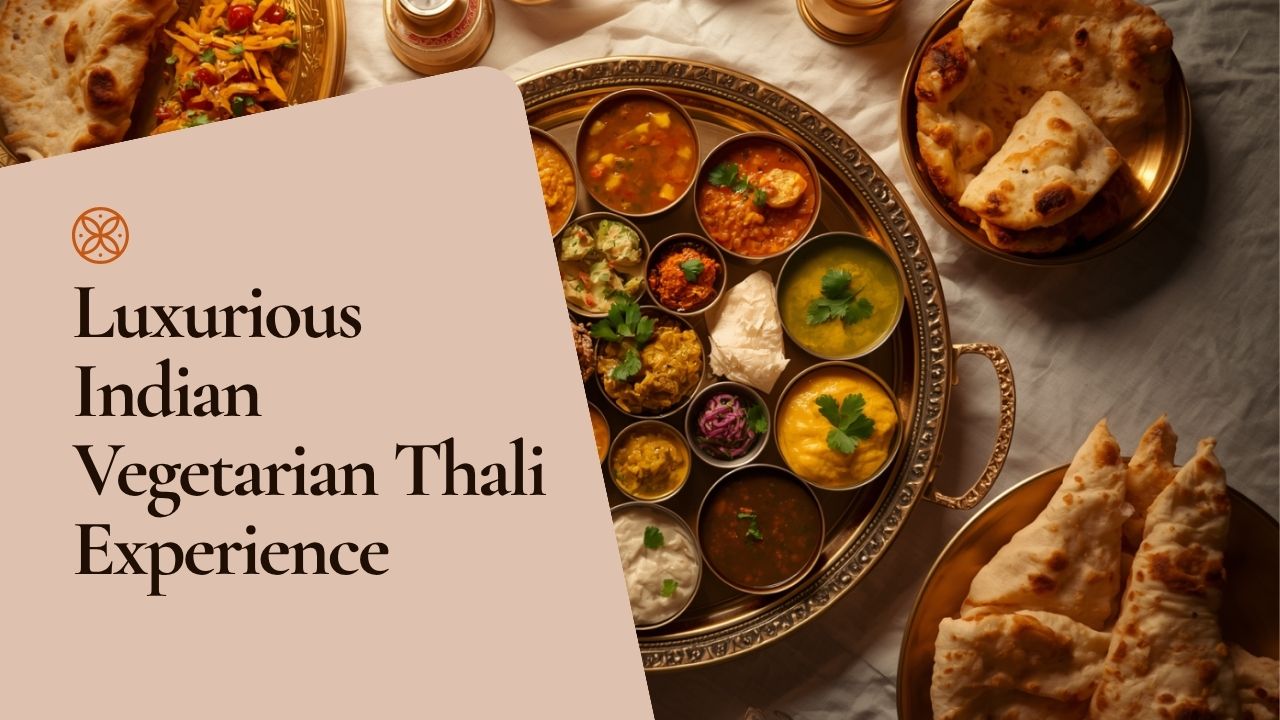
The flavors reflect that abundance. A single thali can carry a dozen preparations at once, dal simmered with cumin and turmeric, vegetable curries built on coriander and garam masala, paneer in a hundred guises, chickpea snacks, fresh chutneys, cooling raita, and breads pulled hot from the tandoor. The country contains many distinct regional traditions within its borders. The coconut-laced sambar and dosa of the south bear little resemblance to the ghee-rich, dairy-forward kitchens of Punjab, or to the mustard-oil cooking of Bengal. Few vegetarian food cultures offer this much internal diversity.
For the luxury traveler, India offers extraordinary access to this heritage. Heritage palace hotels in Rajasthan maintain dedicated vegetarian kitchens of the kind once reserved for maharajas. Private chefs will walk you through a spice market in Old Delhi, then cook what you bought. Culinary tours trace single ingredients, black pepper, cardamom, saffron, back to the farms and hillsides where they grow. To plan the trip in detail, our step-by-step luxury vegetarian travel guide is a practical companion that turns inspiration into an itinerary.
Japan: Shojin Ryori and the Art of Devotion Cuisine
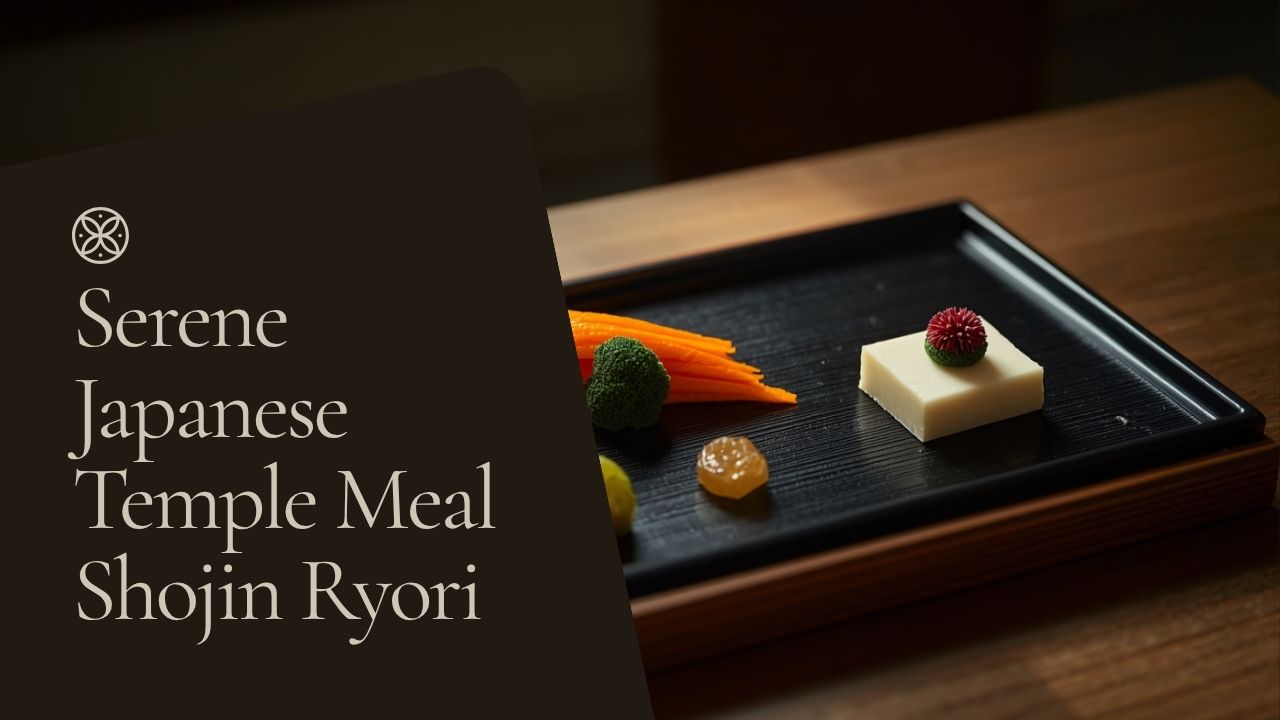
Among the most refined of all vegetarian food cultures is Japan’s shojin ryori, a phrase that translates literally to “devotion cuisine.” When Buddhism spread east from India, its principle of ahimsa traveled with it, and by the 13th century shojin ryori had become widespread alongside the rise of Zen Buddhism. What began as monastic discipline evolved into one of the most aesthetically exacting culinary traditions anywhere in the world.
Shojin ryori is built on balance: the rule of five colors, five flavors, and five cooking methods, all arranged to nourish body and spirit without a trace of animal product. Tofu in many forms, including the silky goma-dofu made from sesame, sits alongside seasonal vegetables, foraged mountain greens, pickles, and delicate kombu and shiitake broths. The portions are small and jewel-like, the lacquerware chosen to complement each dish, and the meal is structured as a meditation rather than mere sustenance. Nothing is wasted and nothing is rushed.
For luxury travelers, Kyoto is the spiritual heart of this tradition. Temple lodgings known as shukubo allow guests to stay overnight within a working monastery and share the monks’ morning and evening meals, often after joining dawn meditation. Beyond the temples, high-end ryokan and Michelin-recognized restaurants serve shojin-inspired tasting menus that elevate the form to haute cuisine. Few of the world’s vegetarian food cultures reward slow, mindful dining quite like Japan’s, and fewer still are as quietly beautiful to behold.
Korea: Temple Cuisine and the Quiet Power of Banchan
Korea’s temple cuisine is one of the most distinctive plant-based traditions in Asia, and it has earned growing recognition from chefs and food writers worldwide in recent years. Rooted in Korean Buddhism, this style of cooking excludes all meat and avoids the five pungent vegetables, garlic, green onion, chives, wild chives, and Chinese squill, which are believed to disturb spiritual practice and inflame the senses.
What makes Korean temple cuisine remarkable is how much depth it draws from apparent simplicity. Kitchens build flavor through patience rather than richness: doenjang, a soybean paste fermented for years, lends a savory backbone, while kimchi is made without the usual fish sauce or garlic. Vegetables are pickled, dried, infused, and fermented to preserve the seasons and concentrate their character. A temple meal typically centers on barley rice, a soup, and a stew, surrounded by an array of small side dishes called banchan, sometimes a dozen or more, which together form a complete and deeply satisfying spread. In this setting, the banchan are not accompaniments; they are the meal.
This is among the most accessible vegetarian food cultures for the curious traveler. Temple stay programs near Seoul and in the mountain monasteries let visitors cook alongside monastic chefs, learning to mix kimchi by hand and to read the seasons through what appears on the table. Meanwhile, a new wave of refined Seoul restaurants is bringing temple principles into the world of fine dining. For travelers who love discovering culinary traditions through hands-on experience, Korea is a genuine standout.
Thailand: The Jay Festival and Street-Level Devotion
Thailand offers a more festive window into Asia’s vegetarian food cultures through the annual Phuket Vegetarian Festival, also known as the Nine Emperor Gods Festival. Held over nine days during the ninth lunar month, usually in October, this celebration sees the island’s Chinese-Thai community adopt a strict “jay” diet, a form of vegan eating that excludes meat, eggs, dairy, and the same pungent vegetables shunned in Buddhist temple cooking.
During the festival, the streets of Phuket Town transform into one of the most vibrant food scenes anywhere. Stalls appear seemingly overnight, marked by yellow flags that signal jay food, selling golden deep-fried taro cakes, bowls of sweet-savory vegetarian noodle soup in a tomato-bean broth, peppery grilled tofu skewers, and an astonishing range of mock-meat creations crafted from soy and mushroom. The cooking unfolds against a backdrop of processions, firecrackers, and ceremony, giving this plant-based tradition an intensity unlike any other.
For the luxury traveler, the contrast is part of the appeal. You can base yourself at a five-star Phuket resort with a spa and an infinity pool, then venture out to experience one of Southeast Asia’s most fervent vegetarian traditions at street level, plate in hand. It is a vivid reminder that the world’s vegetarian food cultures span the full emotional range, from the hushed quiet of a Kyoto temple to the joyful, smoky chaos of a Thai festival night.
The Mediterranean and Middle East: Vegetables at the Center of the Table
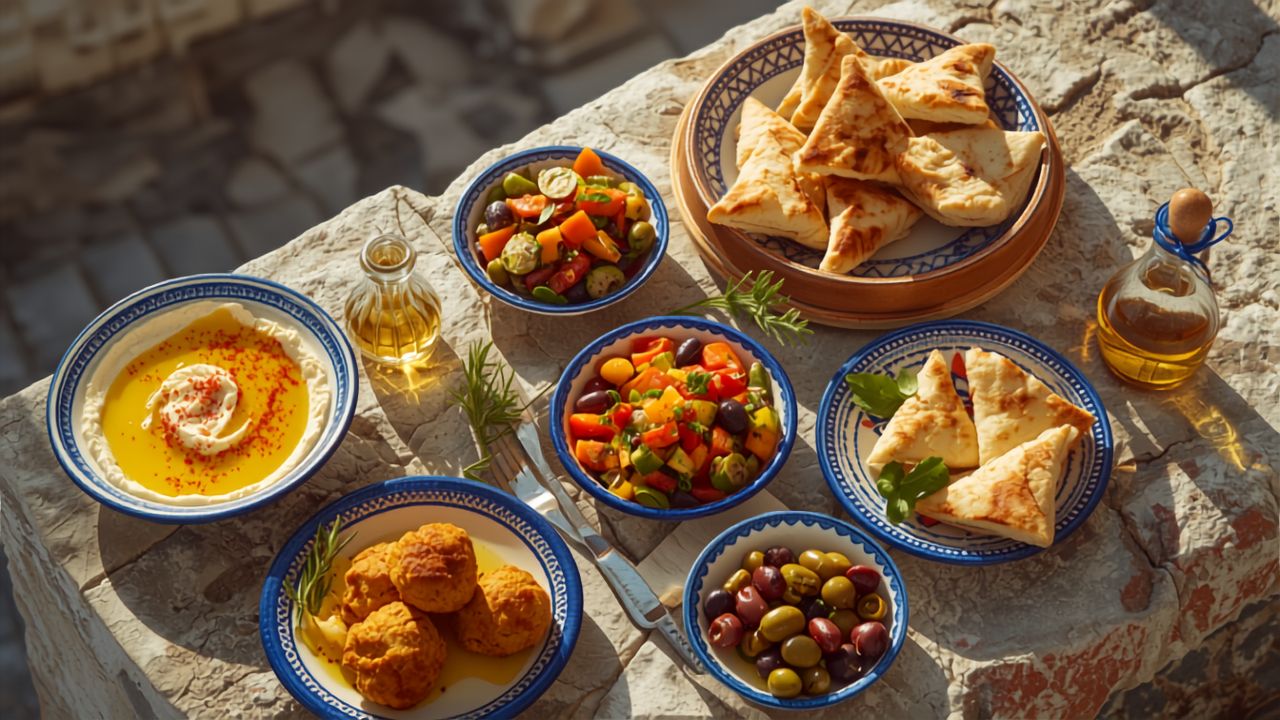
Some of the most approachable vegetarian food cultures grew up around the Mediterranean basin, where fresh vegetables, olive oil, legumes, and herbs have anchored the diet for thousands of years. Unlike the temple traditions of Asia, these were never built on religious ideology. They emerged naturally from a landscape generous with produce and a climate perfectly suited to growing it, which is why the region’s plant-based cooking feels so effortless and sun-soaked.
Greek cuisine gives us spanakopita, gigantes plaki, briam, and an endless parade of vegetable mezze. The Levant contributes hummus, falafel, baba ganoush, tabbouleh, and the generous spread of small plates that turns a simple meal into a celebration of sharing. Across the eastern Mediterranean and the Middle East, the table itself becomes the experience: dozens of dishes arrive at once, meant to be passed, torn, dipped, and lingered over for hours. Vegetarian travelers rarely feel like an exception here, because so much of the food was already meat-free to begin with.
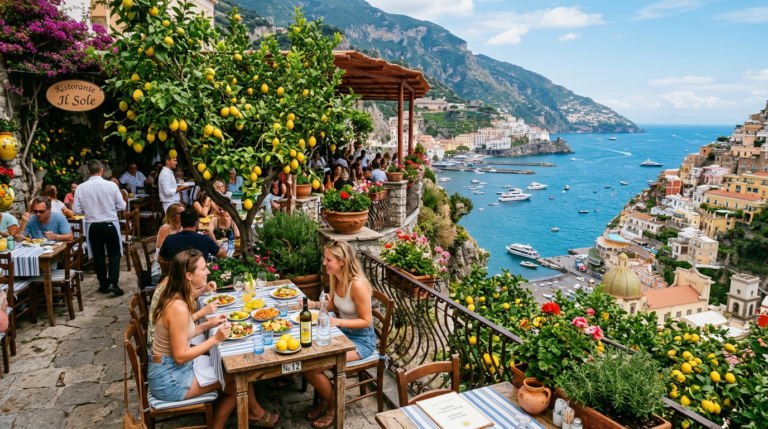
For the luxury traveler, this region rewards both city and coast. Picture private mezze tastings in Beirut, guided visits to family olive-oil estates in the Peloponnese, and seaside dining in the Greek islands where the day’s vegetables were picked that morning from a garden behind the taverna. These Mediterranean traditions pair effortlessly with crisp local wine, warm afternoons, and the kind of unhurried lunches that drift well into evening.
Italy: Cucina Povera and the Genius of Simplicity
Italy deserves its own place among the great vegetarian food cultures, thanks largely to cucina povera, the “poor kitchen” tradition of peasant cooking. Born of necessity in the countryside, cucina povera made the most of seasonal, local ingredients and wasted absolutely nothing, not even stale bread. The result is one of the most beloved plant-forward traditions in Europe, even though Italians themselves rarely frame it in those terms; for them, it is simply how their grandmothers cooked.
Dishes like ribollita, a hearty Tuscan soup of cannellini beans, cavolo nero, and reboiled bread, capture the spirit perfectly. The name itself means “reboiled,” a nod to the thrift at the heart of the cuisine. The same ethos runs through pasta tossed simply with tomato and basil, risottos built on whatever vegetables the season offers, panzanella salads that rescue old bread with ripe tomatoes, and the vegetable-forward antipasti found in every region from Piedmont to Puglia. What unites these vegetarian food cultures of the Italian countryside is restraint: a handful of perfect ingredients, treated with respect and very little interference.
Luxury travel in Italy means meeting this humble tradition at its most polished. Stay at an agriturismo on a working farm in Tuscany or Umbria, take a private pasta-making lesson from a local nonna, and book tasting menus at countryside estates where the vegetables travel only a few meters from garden to plate. For travelers who believe that simplicity is the highest form of sophistication, Italy’s vegetarian heritage is very hard to beat.
To taste cucina povera in its home city, our Rome 3 day itinerary maps out where to eat cacio e pepe, lunch at Il Margutta, which opened in 1979 as Italy’s first vegetarian restaurant, and more across three unhurried days.
Ethiopia: Beyaynetu and the Rhythm of Fasting
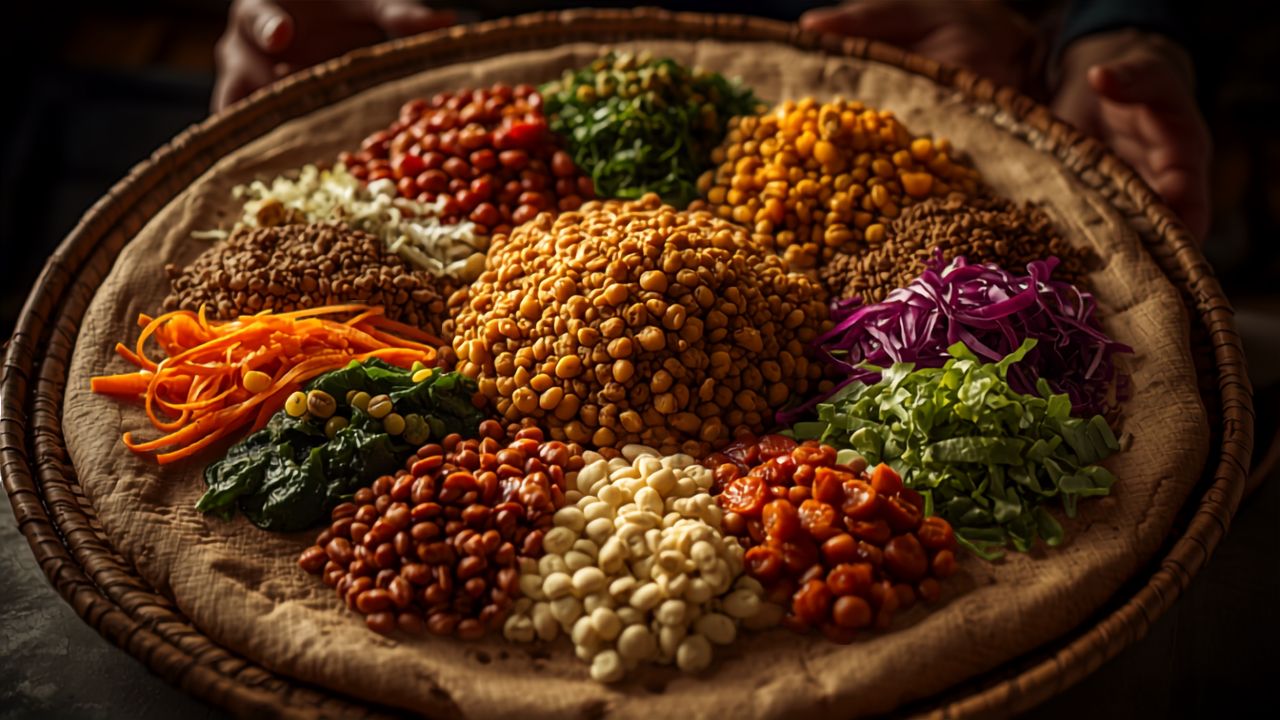
Ethiopia is home to one of the most surprising and rewarding vegetarian food cultures in the world, shaped by the fasting traditions of the Ethiopian Orthodox Church. Observant Ethiopians abstain from all animal products, meat, dairy, and eggs alike, on Wednesdays and Fridays throughout the year, as well as during the long weeks of Lent and other fasting seasons. Because so much of the population observes these days, the country has developed an exceptionally rich repertoire of vegan dishes. Few culinary traditions anywhere are so deeply woven into the weekly rhythm of ordinary life.
The centerpiece is beyaynetu, a name that translates to “a bit of everything.” It arrives as a vivid, colorful platter of lentil stews like the spicy misir wot, spiced split peas, sauteed greens, cabbage and carrot, and an assortment of curries, all served atop injera, the spongy, slightly sour fermented flatbread that doubles as both plate and utensil. Diners tear pieces of injera with their hands and use them to scoop up each preparation, making this one of the most communal and tactile vegetarian food cultures on earth. There is no cutlery and no separation between diners; everyone shares from the same great round.
Because of these fasting traditions, vegetarian and vegan travelers find Ethiopia remarkably easy and rewarding to navigate, often more so than many Western countries. The cuisine has also spread worldwide, with a particularly strong presence in Italy thanks to historical ties between the two nations. For luxury travelers, boutique lodges in Addis Ababa and across the historic northern circuit offer refined takes on this ancient tradition, frequently paired with the unhurried, incense-laced Ethiopian coffee ceremony that closes a proper meal.
Mexico: Oaxaca, Quelites, and Mesoamerican Roots
Mexico’s vegetarian food cultures stretch back to Mesoamerica, thousands of years before European contact, and they remain gloriously vibrant today, especially in the southern state of Oaxaca. The foundation is the ancient agricultural trio of corn, beans, and squash, the “three sisters” grown together for mutual benefit, supplemented by quelites, the wild and tender edible greens that have been central to Mexican cooking for millennia. Of roughly 23,000 plant varieties found in Mexico, around 500 are eaten as quelites, making this one of the most botanically diverse plant-based traditions anywhere on the planet.
In Oaxaca, these ancestral ingredients come alive in tlayudas spread with bean paste and quelites, quesadillas filled with stringy quesillo cheese, complex mole sauces that can contain dozens of components, and empanadas bright with herbs. The region’s cooking is built on heritage corn nixtamalized by hand and on seasonal foraging that changes with the rains. A new generation of Oaxacan chefs is now showcasing this vegetarian heritage in restaurants that draw genuine international acclaim, proving that the old ways and fine dining can share a single plate.
For the luxury traveler, Oaxaca is something of a dream destination: design-forward boutique hotels in restored colonial buildings, private market tours through the stalls of Mercado de Abastos, mezcal tastings, and chef-led menus that celebrate ancestral, plant-based ingredients. Among the world’s vegetarian food cultures, Mexico’s offers some of the most exciting and unexpected flavors, decisive proof that meat-free eating can be bold, smoky, and profoundly complex rather than mild or apologetic.
How to Experience the World’s Vegetarian Food Cultures in Luxury
Knowing about these traditions is one thing; experiencing them at the highest level is another. The encouraging news is that nearly every great vegetarian food culture has a luxury entry point, if you know where to look and whom to ask. Here is how to do it well.
Start with accommodation that takes vegetarian dining seriously, because the right hotel transforms an entire trip. Our guide to the best luxury hotels and resorts for vegetarian travelers is the place to begin. Properties with dedicated vegetarian kitchens, or with chefs who genuinely understand these vegetarian food cultures rather than improvising a single token dish, will elevate every meal of your stay from breakfast to nightcap.
Next, seek out immersive, participatory experiences. Temple stays in Japan and Korea, festival dining in Thailand, hand-led market walks in Oaxaca, and farm-to-table stays in the Italian countryside turn passive sightseeing into active participation. The deepest of the world’s vegetarian food cultures reveal themselves through doing, through your own hands in the dough or the soil, not merely through tasting at a remove.
Finally, build your itinerary around the food rather than treating meals as an afterthought between sights. If you want to sample the finest expressions of plant-based cooking, our roundup of the world’s best vegetarian fine dining restaurants maps the standout kitchens worth planning a journey around. And to understand why all of this is suddenly booming, our analysis of why luxury vegetarian travel is the fastest-growing niche in 2026 provides the wider context.
Planning Tips for Exploring Vegetarian Food Cultures Abroad
A few practical notes will help you get the most from the world’s vegetarian food cultures. First, learn the local vocabulary of vegetarianism. “Jay” in Thailand, “shojin” in Japan, “tsom” or fasting food in Ethiopia, and “comida vegetariana” in Mexico all signal plant-based options, and knowing these terms unlocks doors that an English menu never will. A little linguistic effort is half the pleasure of exploring any of these traditions.
Second, time your visit to coincide with festivals or fasting seasons, when these culinary traditions are at their fullest and most authentic expression. The Phuket Vegetarian Festival each October and the Ethiopian Orthodox fasting calendar both reshape what is available, how it is cooked, and how it is celebrated, often turning an ordinary city into a plant-based wonderland for a few weeks.
Third, hire local guides and chefs rather than relying on guesswork. The nuances of these vegetarian food cultures, which greens are in season, which temple serves the finest meal, which unassuming market stall is worth the detour across town, are best learned from someone who lives them every day. Investing in local expertise is the surest way to experience the world’s plant-based traditions with both depth and ease, and it is exactly where luxury travel earns its keep.
Frequently Asked Questions About Vegetarian Food Cultures
Which country has the strongest vegetarian food culture?
India holds that distinction by a wide margin. With more than 400 million vegetarians and roots in Hinduism, Jainism, and Buddhism, India’s vegetarian tradition is the oldest, largest, and most influential in the world, and around 38 percent of its population eats no meat at all.
Are these vegetarian food cultures suitable for vegans?
Many of them are. Ethiopian fasting cuisine, Thai jay food, and Korean and Japanese temple cooking are typically vegan or very easily adapted, since they exclude dairy and eggs by design. Mediterranean and Italian traditions often include cheese or dairy but still offer an abundance of plant-only options.
How do I experience these traditions in luxury?
Choose accommodations with strong vegetarian programs, book private culinary experiences such as cooking classes and market tours, and time your trip to align with local food traditions and festivals. Pairing the right hotel with immersive, expert-led activities is the key to enjoying the world’s vegetarian food cultures at the highest possible level.
Final Thoughts
The world’s vegetarian food cultures are far older and far richer than today’s plant-based movement might suggest. From the temple kitchens of Kyoto and the mountain monasteries of Korea to the festival streets of Phuket, the fasting tables of Ethiopia, the sun-warmed coasts of the Mediterranean, and the heritage markets of Oaxaca, these traditions prove that vegetables have always been worthy of the finest table. For the luxury traveler, exploring vegetarian food cultures is not a limitation but an invitation, a way to taste the values, faith, and history of a place in a single, beautiful meal. Wherever your next journey takes you, let these remarkable traditions be your guide.
Frequently Asked Questions
Which countries have the best vegetarian food culture?
India has the richest vegetarian food culture in the world, with entire regions where vegetarian cuisine is the default. Japan follows with its Buddhist-influenced shojin ryori tradition. Italy, Thailand, and Ethiopia round out the top five, each offering centuries-old vegetarian culinary traditions that form the foundation of luxury dining experiences.
Is Indian cuisine the best in the world for vegetarians?
India is widely considered the best country for vegetarian cuisine, with the most diverse range of plant-based dishes of any food culture. States like Gujarat, Rajasthan, and Tamil Nadu have cuisines that are almost entirely vegetarian, offering hundreds of distinct dishes across street food, home cooking, and fine dining contexts.
What makes Japanese vegetarian cuisine unique?
Japanese vegetarian cuisine, rooted in the Buddhist shojin ryori tradition, emphasizes seasonal ingredients, umami-rich preparations, and mindful eating. Techniques like dashi made from kombu seaweed, fermented soybean preparations (miso, natto), and meticulous knife work create complexity without animal products. Luxury kaiseki restaurants increasingly offer fully vegetarian tasting menus.
Which European countries are most vegetarian-friendly?
Italy leads Europe for vegetarian food culture with its pasta, risotto, and vegetable-forward traditions. The UK ranks second with the most vegetarian restaurants per capita. Germany and the Netherlands follow with rapidly growing plant-based dining scenes. Portugal is an emerging destination with innovative vegetarian fine dining.
How do food cultures influence luxury vegetarian travel?
Food culture is the primary driver of vegetarian luxury travel decisions. Destinations with deep-rooted vegetarian traditions (India, Japan, Italy) offer the most authentic and diverse plant-based dining experiences. Luxury hotels in these destinations can draw on centuries of culinary heritage rather than simply adapting meat-based dishes, resulting in more creative and satisfying vegetarian menus.