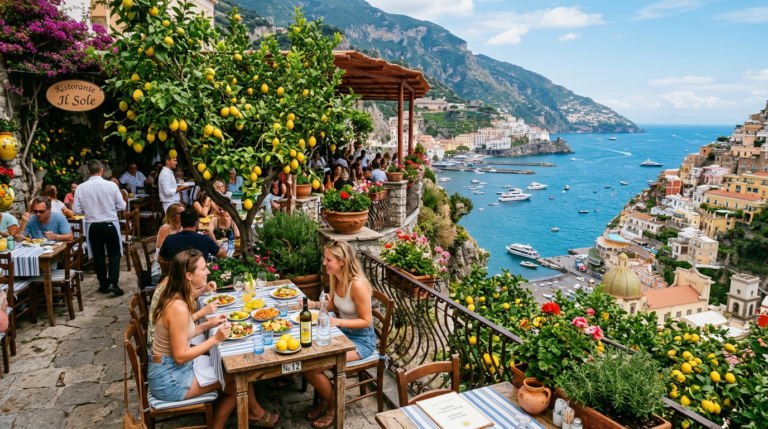
Luxury Vegetarian Travel in India: The Definitive Guide

India’s Golden Triangle is one of the world’s most iconic travel circuits, and for anyone seeking luxury vegetarian India experiences, it delivers on every front. Connecting Delhi, Agra, and Jaipur in a roughly triangular route across northern India, this corridor puts palace hotels, centuries-old vegetarian culinary traditions, and UNESCO World Heritage Sites within easy reach of each other. For the luxury vegetarian traveler, there may be no better introduction to the subcontinent.
Unlike many international destinations where plant-based dining requires advance planning and careful restaurant scouting, India flips the script entirely. Vegetarianism is woven into the cultural and spiritual fabric of the country. Roughly a third of India’s population follows a vegetarian diet, and in Rajasthan – home to Jaipur, the triangle’s westernmost point – that figure climbs even higher. The result is a culinary landscape where luxury vegetarian India dining is not an afterthought but the main event, elevated to extraordinary heights by five-star hotel kitchens and heritage palace restaurants.
This guide walks you through the best luxury vegetarian India experiences across the Golden Triangle: where to stay, where to eat, what to see, and how to plan a journey that balances indulgence with cultural immersion.
Why the Golden Triangle Is Perfect for Luxury Vegetarian Travelers
Before diving into city-by-city recommendations, it helps to understand why luxury vegetarian India travel works so well along this particular route.
First, the infrastructure is outstanding. For anyone planning a luxury vegetarian India journey, the Delhi-Agra-Jaipur corridor is home to the country’s highest concentration of world-class hotels, including properties by Oberoi, Taj, ITC, and Leela. These chains have perfected the art of vegetarian fine dining over decades, drawing on royal kitchen traditions that predate the hotel industry itself.
Second, the culinary diversity is unmatched. The luxury vegetarian India dining scene across these three cities covers an extraordinary range. Delhi offers everything from Mughlai paneer preparations to modern plant-based tasting menus. Agra specializes in Braj cuisine, a centuries-old vegetarian tradition tied to the region’s Krishna devotion. Jaipur brings Rajasthani thalis, dal baati churma, and palace banquet cuisine that was historically vegetarian by default.
Third, the distances are manageable. Delhi to Agra is roughly 230 kilometers, Agra to Jaipur about 240 kilometers, and Jaipur back to Delhi around 270 kilometers. With a private driver – the recommended way to travel the Golden Triangle in luxury – the entire circuit fits comfortably into seven to ten days, making luxury vegetarian India travel along this corridor both comfortable and scenic.
For travelers who have explored luxury vegetarian Bali or other Southeast Asian destinations, India’s Golden Triangle offers a fundamentally different experience: one where vegetarian cuisine is not adapted from a meat-centric tradition but has been refined as its own art form across centuries of royal patronage.

Delhi: Where Luxury Vegetarian India Journeys Begin
Delhi is where most luxury vegetarian India itineraries start, and the city rewards a stay of at least two or three nights. As India’s capital, it layers Mughal history, colonial architecture, and modern cosmopolitan energy into a city that can feel like several destinations in one.
Where to Stay in Delhi
The Leela Palace New Delhi sits along the Diplomatic Enclave and consistently ranks among Asia’s finest luxury hotels. For luxury vegetarian India guests, its Indian restaurant Jamavar serves an exceptional vegetarian tasting menu featuring dishes like truffle-infused paneer tikka and saffron-scented dal makhani. The hotel’s Le Cirque brings Italian fine dining with dedicated vegetarian courses that go well beyond pasta primavera.
ITC Maurya, a Luxury Collection Hotel is home to Bukhara, one of the most celebrated restaurants in all of India. While Bukhara is known for its tandoor cooking, its vegetarian offerings are legendary in their own right. The Dal Bukhara – black lentils slow-cooked for over 18 hours with tomatoes, ginger, and cream – has been on the menu since 1977 and remains one of Delhi’s most iconic dishes. ITC properties represent the gold standard of luxury vegetarian India hospitality, and the kitchen works extensively with seasonal, locally sourced produce.
The Imperial New Delhi offers something different: a museum-hotel with one of the finest private art collections in India. For the luxury vegetarian traveler in India, The Imperial’s 1911 restaurant serves refined European-influenced vegetarian plates, while Daniell’s Tavern delivers heritage Indian vegetarian dishes in a colonial-era setting.
Vegetarian Fine Dining in Delhi
Beyond the hotel restaurants, Delhi’s independent dining scene reinforces why luxury vegetarian India travel stands apart from plant-based dining anywhere else in the world.
Indian Accent is arguably Delhi’s most acclaimed restaurant and holds a place on Asia’s 50 Best Restaurants list. Chef Manish Mehrotra’s tasting menu features inventive vegetarian courses that reimagine Indian ingredients through contemporary technique. Dishes like the blue cheese naan with pear chutney and the daulat ki chaat (a traditional Old Delhi sweet elevated with saffron and pistachios) showcase the kind of luxury vegetarian India dining that keeps food critics returning.
AnnYatra represents Delhi’s newer wave of vegetarian fine dining, focusing on seasonal produce, indigenous grains, and traditional spices. The chef’s tasting menu changes with the harvest calendar, and the restaurant’s commitment to regional vegetarian traditions makes it a natural fit for travelers interested in vegetarian food cultures around the world.
AnnaMaya at Andaz Delhi takes a farm-to-table approach, working directly with small-scale farmers and artisanal producers. The vegetarian dishes here lean lighter than traditional North Indian cuisine, making it a perfect lunch stop on any luxury vegetarian India tour through Delhi.
Must-See Experiences in Delhi
No luxury vegetarian India itinerary through Delhi is complete without visiting Humayun’s Tomb, the 16th-century Mughal garden tomb that inspired the Taj Mahal’s design. The quieter atmosphere here, compared to the Taj itself, makes it one of Delhi’s most pleasant heritage visits.
Chandni Chowk, Old Delhi’s legendary market street, offers a sensory overload that no luxury hotel can replicate. No luxury vegetarian India experience is complete without tasting Delhi’s street food heritage: crispy kachori sabzi from Shyam Sweets, creamy rabri from centuries-old milk shops, and stuffed parathas from Paranthe Wali Gali, a lane dedicated entirely to the stuffed flatbread. Consider booking a guided food walk to navigate the chaos comfortably.
Qutub Minar, the 73-meter sandstone tower dating to 1193, and Lotus Temple, the striking Baha’i house of worship shaped like a lotus flower, round out Delhi’s architectural highlights.
Agra: Taj Mahal Views and Royal Vegetarian Traditions
Agra is the emotional centerpiece of any Golden Triangle journey. The city is smaller and less cosmopolitan than Delhi, but for luxury vegetarian India travelers, it holds the country’s most famous monument and a vegetarian culinary tradition rooted in devotion to Lord Krishna.
Where to Stay in Agra
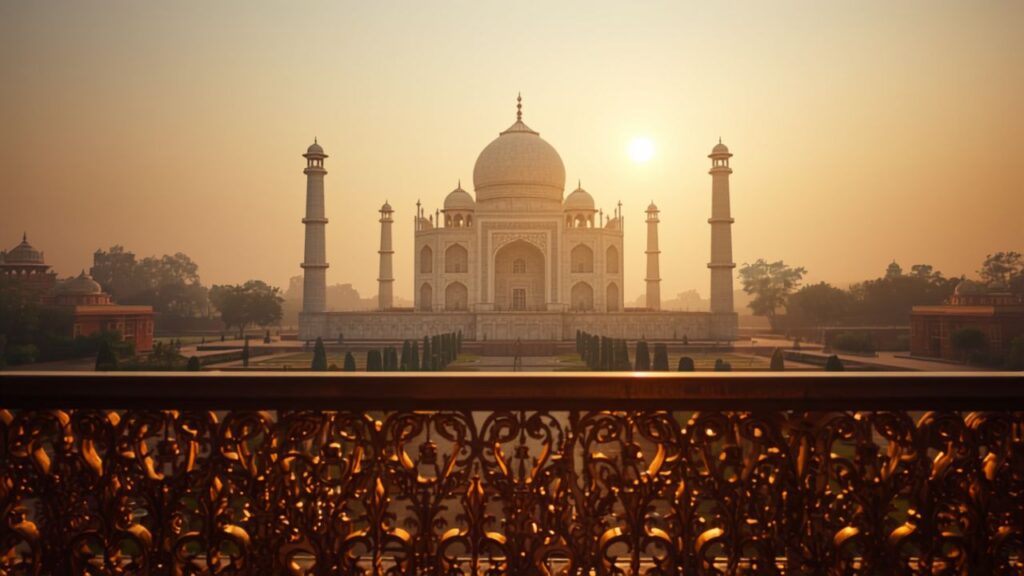
The Oberoi Amarvilas is, without exaggeration, one of the most extraordinary hotel locations in the world. Every room offers an unobstructed view of the Taj Mahal, and the property’s Mughal-inspired architecture – with fountains, terraced gardens, and hand-carved archways – creates a sense of stepping into a royal court. For luxury vegetarian India travelers, the dining options are superb. Esphahan, the hotel’s signature restaurant, serves recipes inherited from Mughal royal kitchens. The vegetarian thali here features dishes like paneer do pyaza, dum aloo, and freshly baked naan, all served on silver platters while traditional musicians play in the background. For a truly unforgettable evening, book the private Dine Under the Stars experience: a candlelit four-course meal served by a personal butler on the terrace, with the illuminated Taj Mahal as your backdrop.
ITC Mughal sprawls across 23 acres of Mughal-inspired gardens and offers a more expansive resort experience. The hotel’s Peshawri restaurant serves a luxury vegetarian India menu that mirrors its Delhi sibling Bukhara in quality, and the full-service Kaya Kalp spa provides welcome recovery after a day of sightseeing.
Vegetarian Dining in Agra
Agra sits in the Braj region, historically associated with Krishna worship, which makes it one of the most naturally vegetarian-friendly cities in India. The local Braj cuisine emphasizes milk, yogurt, lentils, and seasonal vegetables, prepared without onion and garlic in the traditional Sattvic style. This is what makes luxury vegetarian India travel in the Braj region so distinctive.
Pinch of Spice offers upscale North Indian vegetarian dishes including a well-regarded paneer makhani and a range of vegetarian kebab preparations. Joney’s Place, a more intimate family-run restaurant near the Taj Mahal, delivers exceptional home-style vegetarian cooking – their rajma (kidney bean curry) and dal preparations have earned a devoted following among travelers who appreciate simplicity done perfectly.
For travelers who have read our guide to the world’s best vegetarian fine dining, Agra’s luxury vegetarian India dining scene operates at a different register. This is not about Michelin stars and avant-garde plating. It is about centuries-old recipes, handed down through generations, that treat vegetarian cuisine as the pinnacle rather than the alternative.
Must-See Experiences in Agra
The Taj Mahal needs no introduction, but timing your visit matters enormously. Arrive at the East Gate by 6:00 AM (gates open at sunrise) to experience the monument in soft golden light with relatively thin crowds. The marble surfaces shift color throughout the morning, and the reflection pools create mirror images that photographs barely capture. The Taj is closed on Fridays.
Mehtab Bagh (the Moonlight Garden) sits across the Yamuna River from the Taj Mahal and offers the best sunset views of the monument. This is one of the most photographed moments on any luxury vegetarian India Golden Triangle itinerary: the Taj framed by gardens and river, glowing amber in the fading light.
Agra Fort, a UNESCO World Heritage Site in its own right, is a massive red sandstone fortress that served as the Mughal imperial residence. The fort’s Diwan-i-Khas (Hall of Private Audiences) and the Musamman Burj – the tower where Emperor Shah Jahan spent his final years gazing at the Taj Mahal – are among India’s most poignant historical spaces.
Jaipur: Palace Hotels and Rajasthani Feasts
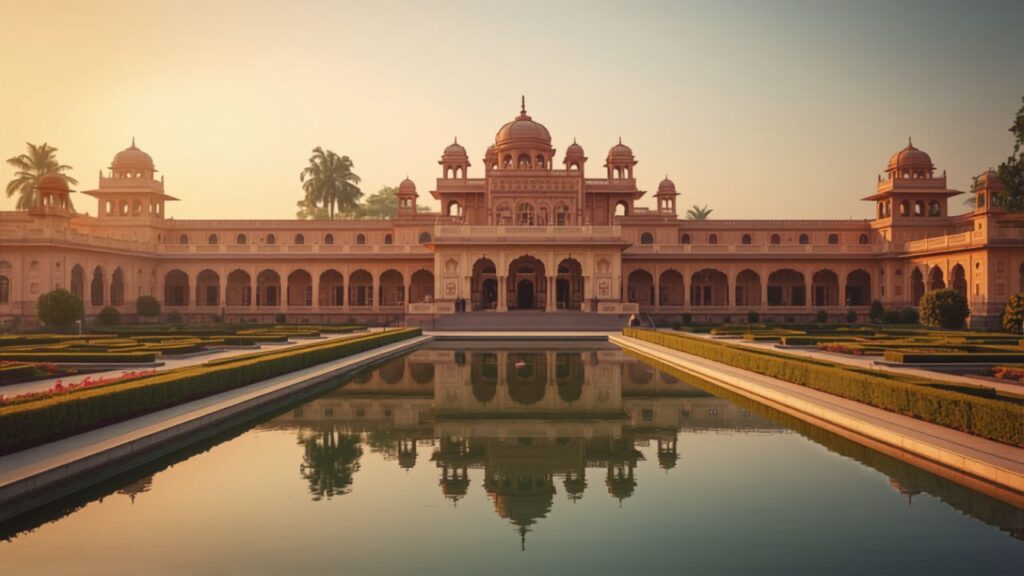
Jaipur, the Pink City, is where the luxury vegetarian India experience reaches its most opulent expression. Rajasthan’s capital combines living palace hotels, vibrant bazaars, dramatic hilltop forts, and a vegetarian culinary tradition deeply tied to the region’s royal heritage. Many Rajput royal families maintained strictly vegetarian kitchens, and this legacy lives on in Jaipur’s finest restaurants.
Where to Stay in Jaipur
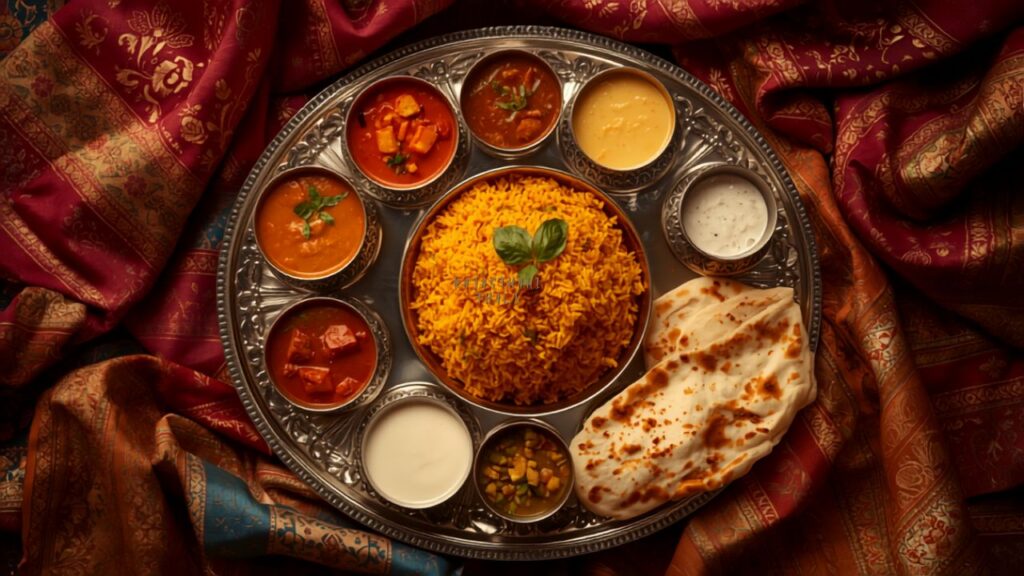
Rambagh Palace is the crown jewel of Jaipur’s hotel scene and one of the most famous palace hotels in the world. Once the residence of the Maharaja of Jaipur, this Taj Hotels property retains its marble corridors, manicured gardens, royal courtyards, and regal suites. For the luxury vegetarian traveler in India, the dining at Rambagh Palace is transcendent. Suvarna Mahal, the palace’s signature Indian restaurant, serves royal cuisines from the princely states of Rajasthan, Awadh, Punjab, and Hyderabad beneath a ceiling painted with vegetable-dye murals depicting the seasons. The vegetarian Rajasthani thali here is a multi-course ceremony of flavors – from delicate paneer preparations to smoky dal and freshly churned butter served with bajra rotis. Suvarna Mahal holds a 4.9 rating on Tripadvisor and ranks among Jaipur’s finest luxury vegetarian India dining experiences.
The Oberoi Rajvilas takes a different approach to luxury: a 32-acre resort where peacocks roam freely among more than 40 species of birds, and tented luxury villas with private gardens offer seclusion that palace hotels cannot match. The luxury vegetarian India dining here draws on Rajasthani and pan-Indian traditions, served in intimate settings that range from poolside to the torchlit courtyard.
Raj Palace holds the distinction of being Jaipur’s oldest palace, built in 1727 and located among four famous palace complexes including Amber Palace and City Palace. Unlike many converted palace hotels, Raj Palace retains its original architectural character from the era when the royal family resided here. For travelers who appreciate staying in places featured on our best luxury hotels for vegetarian travelers list, Jaipur offers an embarrassment of riches.
Samode Palace, about 40 kilometers outside Jaipur, merits special mention. This 475-year-old nobleman’s residence, now a luxurious heritage hotel, sits surrounded by Mughal gardens with pavilions and water channels. The relative seclusion means fewer tourists and a more immersive luxury vegetarian India palace experience.
Vegetarian Dining in Jaipur
For luxury vegetarian India travelers, Jaipur’s dining scene is unmatched in authenticity. Many restaurants here serve dishes that are vegetarian not as a concession to dietary preferences but as the authentic expression of centuries of royal kitchen tradition.
1135 AD, located inside the Amber Fort complex, is a must-visit for any luxury vegetarian India itinerary through Jaipur. The restaurant serves Rajput royal cuisine in a setting that feels like dining inside a living museum. It is named for the year Amber Fort was established, and the vegetarian dishes – including gate ki sabzi (a delicacy made from dried vegetable preparations), panchmel dal, and ker sangri – reflect recipes that sustained the Rajput courts for centuries.
Chokhi Dhani offers something entirely different: a recreated Rajasthani village where guests experience folk dances, puppet shows, and traditional games before sitting down to a massive vegetarian Rajasthani thali served on leaf plates. It is unabashedly tourist-oriented but genuinely fun, and the food quality is surprisingly good. For luxury vegetarian India travelers who want an immersive cultural evening, Chokhi Dhani delivers.
Spice Court provides a more contemporary fine dining experience, with a menu that spans Rajasthani classics and modern Indian vegetarian preparations. The rooftop setting offers views across the Pink City skyline.
For a deeper understanding of how Rajasthani vegetarian cuisine fits into the global picture, our guide to vegetarian food cultures around the world explores the cultural and historical roots of plant-based traditions across continents.
Must-See Experiences in Jaipur
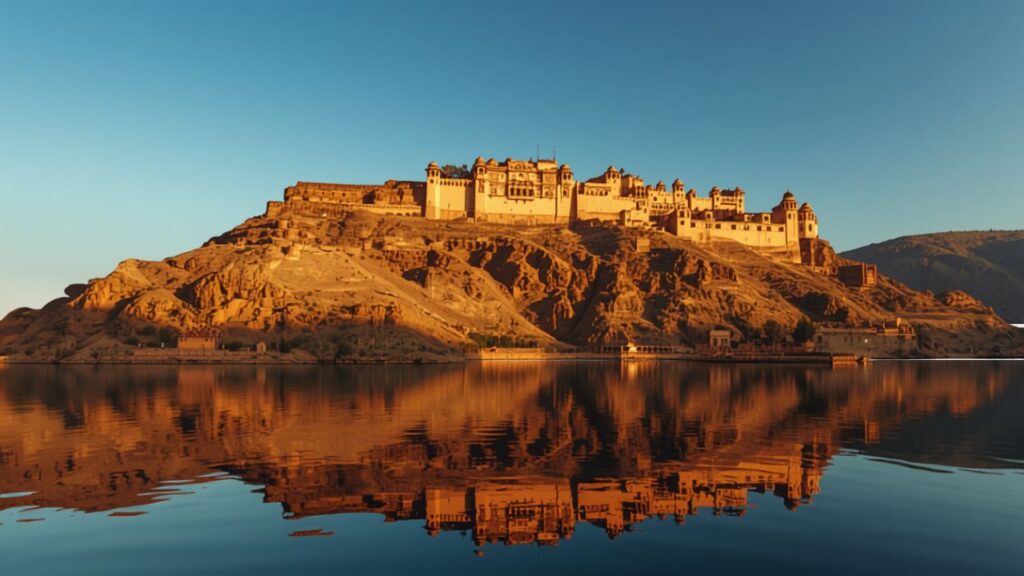
Amber Fort is the Golden Triangle’s most spectacular fortress and a highlight of any luxury vegetarian India Golden Triangle circuit. Rising from a hillside with honey-colored ramparts reflected in Maota Lake below, the Sheesh Mahal (Mirror Palace) inside, with its walls and ceiling covered in thousands of tiny mirrors, is one of India’s most photographed interiors. Consider arriving by elephant or jeep and spending a full morning exploring.
City Palace sits in the heart of Jaipur and remains partially occupied by the royal family. The museum sections house an extraordinary collection of royal garments, weapons, manuscripts, and art. The Mubarak Mahal courtyard and the Peacock Gate are architectural highlights.
Hawa Mahal (the Palace of Winds) is Jaipur’s most iconic facade: five stories of ornate sandstone windows designed so that royal women could observe street life without being seen. The best photos are taken from the rooftop cafes across the street.
Jantar Mantar, the astronomical observation site built by Maharaja Sawai Jai Singh II in 1734, contains the world’s largest stone sundial. It is a UNESCO World Heritage Site and a fascinating window into the scientific ambitions of India’s princely courts.
A Sample 7-Day Luxury Vegetarian India Golden Triangle Itinerary
Planning the logistics of a luxury vegetarian India Golden Triangle trip is straightforward, but pacing matters. Here is a day-by-day framework that balances sightseeing with relaxation.
Days 1-2: Delhi. Begin your luxury vegetarian India adventure in the capital. Spend Day 1 recovering from jet lag with a spa treatment and an evening dinner at the hotel restaurant. Day 2: morning visit to Humayun’s Tomb and Qutub Minar, lunch at Indian Accent, afternoon at the National Museum or Lodhi Gardens, evening food walk through Chandni Chowk.
Day 3: Delhi to Agra (4-5 hours by private car). Depart after breakfast and arrive in Agra by lunch. Afternoon visit to Agra Fort. Evening: settle into the Oberoi Amarvilas and enjoy the Taj Mahal views from your room and terrace.
Day 4: Agra. Sunrise visit to the Taj Mahal (arrive by 5:30 AM). Return to the hotel for a late breakfast. Late afternoon visit to Mehtab Bagh for sunset views of the Taj. Evening: Dine Under the Stars experience or dinner at Esphahan.
Day 5: Agra to Jaipur (5-6 hours, with a stop at Fatehpur Sikri). Visit Fatehpur Sikri, the abandoned Mughal capital, en route. This red sandstone ghost city is a UNESCO World Heritage Site and takes about two hours to explore. Arrive in Jaipur by evening and check into your palace hotel.
Day 6: Jaipur. Morning visit to Amber Fort (allow three hours). Lunch at 1135 AD inside the fort complex. Afternoon: City Palace and Jantar Mantar. Evening: dinner at Suvarna Mahal in Rambagh Palace – the pinnacle of luxury vegetarian India dining on the Golden Triangle.
Day 7: Jaipur and Departure. Morning: Hawa Mahal and the bazaars of Johari Bazaar and Bapu Bazaar for textiles, jewelry, and block-printed fabrics. Afternoon: transfer to Jaipur airport (direct flights to Delhi, Mumbai, and other major cities) or drive back to Delhi.
For travelers who want a comprehensive framework for building trips like this, our complete guide to planning vegetarian travel in luxury covers everything from restaurant scouting to hotel communication strategies.
When to Visit for the Best Luxury Vegetarian India Experience
Timing can make or break a luxury vegetarian India Golden Triangle trip. The ideal months fall into two windows.
October to November brings the post-monsoon sweet spot: clear skies, comfortable temperatures in the mid-20s Celsius, and the festive season (Diwali in October/November adds spectacular visual energy to the cities). Hotel rates are premium but availability is still manageable with advance booking.
February to March offers similar weather conditions and the chance to experience Holi, the festival of colors, in early March. Jaipur’s Holi celebrations are particularly vibrant. Planning your luxury vegetarian India visit around these windows ensures the best weather and the richest cultural calendar.
Months to avoid: April through June brings extreme heat, with temperatures regularly exceeding 45 degrees Celsius in Agra and Jaipur. December and January can be pleasant temperature-wise but bring dense fog to Agra, which can obscure views of the Taj Mahal for days at a time.
The monsoon season (July through September) transforms the landscape into lush green but makes sightseeing unpredictable and can cause travel delays on the roads between cities.
To pair India with other destinations across the year, see our luxury vegetarian travel by month calendar, which maps 24 luxury vegetarian destinations with the best month and booking window for each.
Practical Tips for Luxury Vegetarian India Travelers
Private driver vs. train: For a luxury vegetarian India experience, hire a private driver and air-conditioned vehicle for the entire circuit. This gives you flexibility to stop at heritage sites en route, avoid crowded train stations, and travel at your own pace. Your hotel concierge can arrange this, or book through a reputable luxury tour operator.
Communicating dietary needs: Luxury vegetarian India travel is remarkably easy compared to most international destinations. Most restaurants have separate vegetarian and non-vegetarian menus, and “pure veg” restaurants are common. If you also avoid eggs, mention this specifically, as Indian vegetarian dishes may occasionally include them. The term “Jain food” signals a meal prepared without onion, garlic, and root vegetables – useful for travelers with stricter preferences.
Water and food safety: Stick to bottled or filtered water and ice only at luxury hotels and established restaurants. The hotels recommended in this luxury vegetarian India guide all maintain international hygiene standards.
Dress code: When visiting temples, mosques, and certain heritage sites, modest clothing covering shoulders and knees is expected. Remove shoes before entering religious spaces. Luxury hotel restaurants in Delhi and Jaipur often have smart-casual dress codes for dinner.
Tipping: A 10-15% tip at restaurants is customary (check whether service charge is included). Hotel staff, drivers, and guides appreciate tips as well – your hotel can advise on appropriate amounts.
Final Thoughts on Luxury Vegetarian Travel in India’s Golden Triangle
India’s Golden Triangle stands apart from virtually every other luxury travel destination in the world for one simple reason: vegetarian cuisine here is not a limitation to work around but a tradition to celebrate. From the slow-cooked Dal Bukhara at ITC Maurya to the royal thali at Rambagh Palace’s Suvarna Mahal, the luxury vegetarian India dining across Delhi, Agra, and Jaipur rivals anything the non-vegetarian world has to offer.
Combine that culinary heritage with palace hotels that were actual palaces, UNESCO monuments that redefine architectural ambition, and a travel infrastructure refined over decades of high-end tourism, and you have a luxury vegetarian India experience that belongs on every discerning traveler’s itinerary.
For more destination guides and luxury vegetarian travel inspiration, explore our ultimate guide to luxury vegetarian travel destinations worldwide.
Frequently Asked Questions
Why is India considered the best destination for vegetarian travelers?
India is the best destination for vegetarian travelers because over 30% of its 1.4 billion population is vegetarian, making it the country with the largest vegetarian food infrastructure in the world. Entire regions like Gujarat and Rajasthan serve predominantly vegetarian cuisine, and luxury palace hotels offer hundreds of distinct vegetarian dishes across regional traditions.
What are the best luxury vegetarian hotels in India?
The best luxury vegetarian hotels in India include Sujan Rajmahal Palace in Jaipur, Taj Lake Palace in Udaipur, The Oberoi Amarvilas in Agra, Shreyas Retreat near Bangalore (100% vegetarian), and The Leela Palace in New Delhi. Sujan Rajmahal Palace is particularly notable for its royal Rajasthani vegetarian thali featuring over 15 dishes.
Which Indian cities have the best vegetarian food?
Jaipur and Udaipur in Rajasthan offer the richest luxury vegetarian dining with royal Rajasthani cuisine. Varanasi has exceptional traditional vegetarian street food. Chennai and Madurai in Tamil Nadu serve world-class South Indian vegetarian cuisine. Mumbai offers the widest range from street food to fine dining vegetarian restaurants.
Is Indian vegetarian food available at luxury resorts?
Yes, Indian luxury resorts and palace hotels typically offer the most extensive vegetarian menus of any country. Properties like The Oberoi chain, Taj Hotels, and ITC Hotels feature dedicated vegetarian restaurants serving regional specialties. Many luxury resorts in Rajasthan and Kerala operate entirely vegetarian kitchens with organic ingredients sourced from on-site gardens.
What vegetarian dishes should I try in India?
Essential vegetarian dishes to try in India include paneer tikka and dal makhani in North India, masala dosa and sambar in South India, dhokla and thepla in Gujarat, litti chokha in Bihar, and the royal Rajasthani thali with dal baati churma. At luxury hotels, request the chef’s vegetarian tasting menu for the most elevated regional preparations.